Student
Saipan
Location
Anchorage, Alaska, USA
Program Year
2025
Published
Case Study
Case Study: Earning Back Program Costs With One Airline Catering Job in Anchorage
An English case study based on Saipan's Summer 2025 Work and Travel experience at LSG Sky Chefs in Anchorage, Alaska, covering airline catering assembly work, overtime, strict workplace standards, and life after shifts.
Background
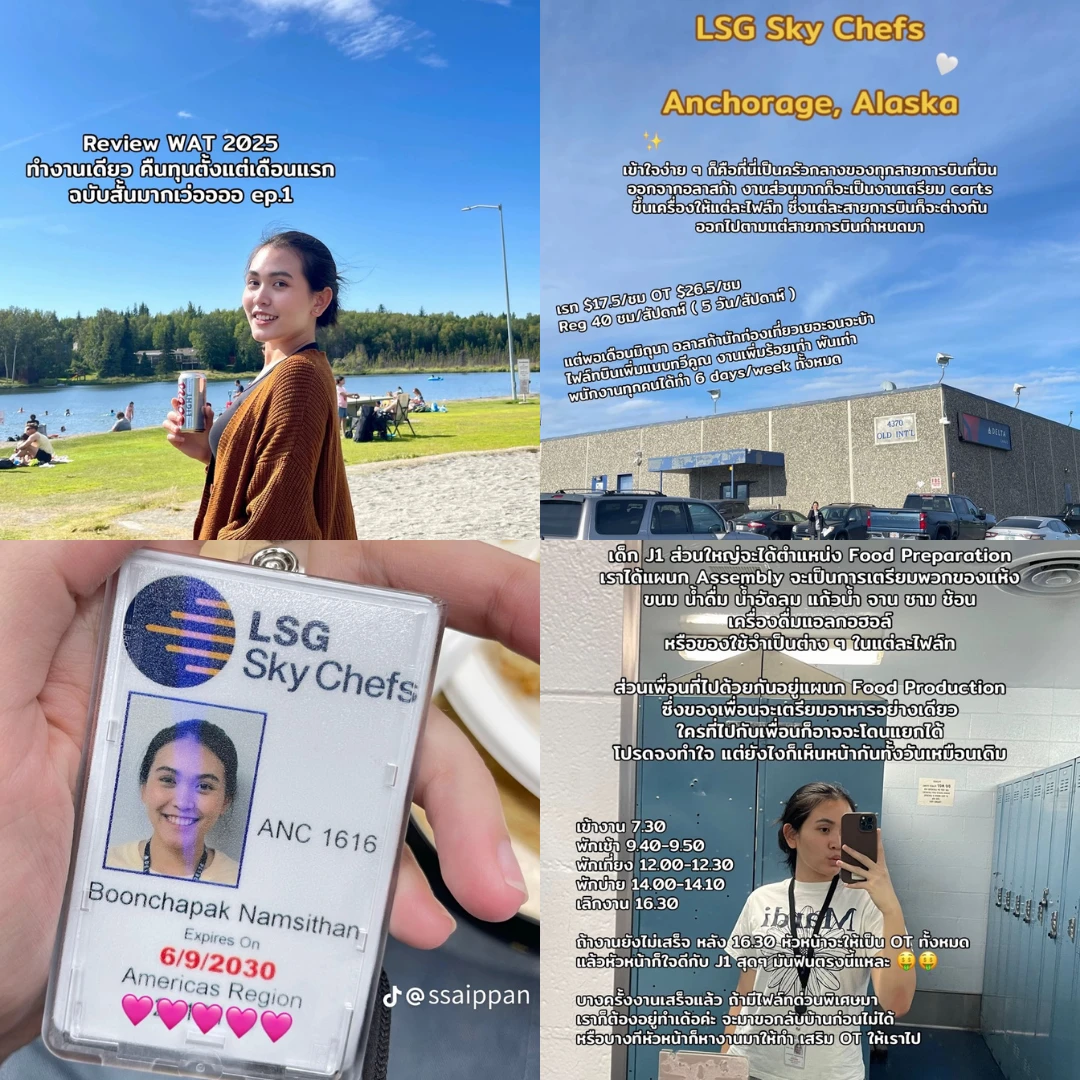
Saipan joined the Work and Travel USA program during the Summer 2025 season and worked at LSG Sky Chefs in Anchorage, Alaska. Unlike many students who combine two or three jobs, this case is built around a single employer with strong earning potential.
LSG Sky Chefs operates as an airline catering facility. In simple terms, the workplace prepares carts and supplies for flights leaving Alaska. That includes dry goods, drinks, utensils, food components, and airline-specific service items.
The case is useful for students who want a higher-ROI Work and Travel season but do not necessarily want to chase multiple employers. Saipan’s experience shows that one job can be enough when the wage, hours, and overtime structure are strong.
| Case Snapshot | Detail |
|---|---|
| Employer | LSG Sky Chefs |
| Location | Anchorage, Alaska |
| Season | Summer 2025 |
| Base rate | $17.50/hr |
| Overtime rate | $26.50/hr |
| Regular schedule | 40 hours/week, 5 days/week |
| Peak-season pattern | 6 days/week during heavy summer flight volume |
| Main department | Assembly |
Why LSG Sky Chefs in Anchorage
Anchorage is a different type of Work and Travel destination from beach towns and theme-park cities. The job market can include operational, logistics, hospitality, and food-production roles tied to Alaska’s summer travel season.
LSG Sky Chefs stood out because the job offered a high hourly wage and consistent hours. During June, tourism and flight volume increased sharply, which pushed the workload higher. Saipan reported that employees moved from the regular five-day schedule to six working days per week during peak demand.
For financially motivated students, this is the core attraction: the earning structure can be strong without needing a second job. The trade-off is that the work is detailed, strict, repetitive, and physically demanding.
The financial upside came from one serious workplace, not from stacking multiple casual jobs. That makes this placement attractive for students who prefer structure and predictable earning potential.
Job Structure and Pay
LSG Sky Chefs treated J-1 participants like regular employees. That meant the same expectations around attendance, punctuality, breaks, start times, end times, and work responsibilities.
There was little room for informal exceptions. This is important for students to understand before accepting a placement like this. The job can be rewarding, but it is not a light seasonal role where students can rely on flexibility from the employer.
| Work Term | Detail |
|---|---|
| Base wage | $17.50/hr |
| Overtime wage | $26.50/hr |
| Regular hours | 40 hours/week |
| Regular workdays | 5 days/week |
| Peak-season workdays | 6 days/week |
| Standard start time | 7:30 AM |
| Standard end time | 4:30 PM |
| Overtime trigger | Work after the scheduled end time |
The overtime setup was a major benefit. If work continued after 4:30 PM, the additional time counted as overtime. Sometimes urgent flight requirements arrived late, so the team had to stay and complete the work rather than leave early.
Daily Schedule
The day followed a structured operational rhythm:
| Time | Activity |
|---|---|
| 7:30 AM | Start work |
| 9:40-9:50 AM | Morning break |
| 12:00-12:30 PM | Lunch break |
| 2:00-2:10 PM | Afternoon break |
| 4:30 PM | Scheduled end of shift |
Because the workplace handled airline catering, completion time depended on flight schedules and urgent requests. When late changes came in, employees were expected to stay and finish the work.
The dress code was practical. Employees could arrive in regular clothes because the job required sanitary protective layers, including an apron-style cover and hair covering.
Department: Assembly
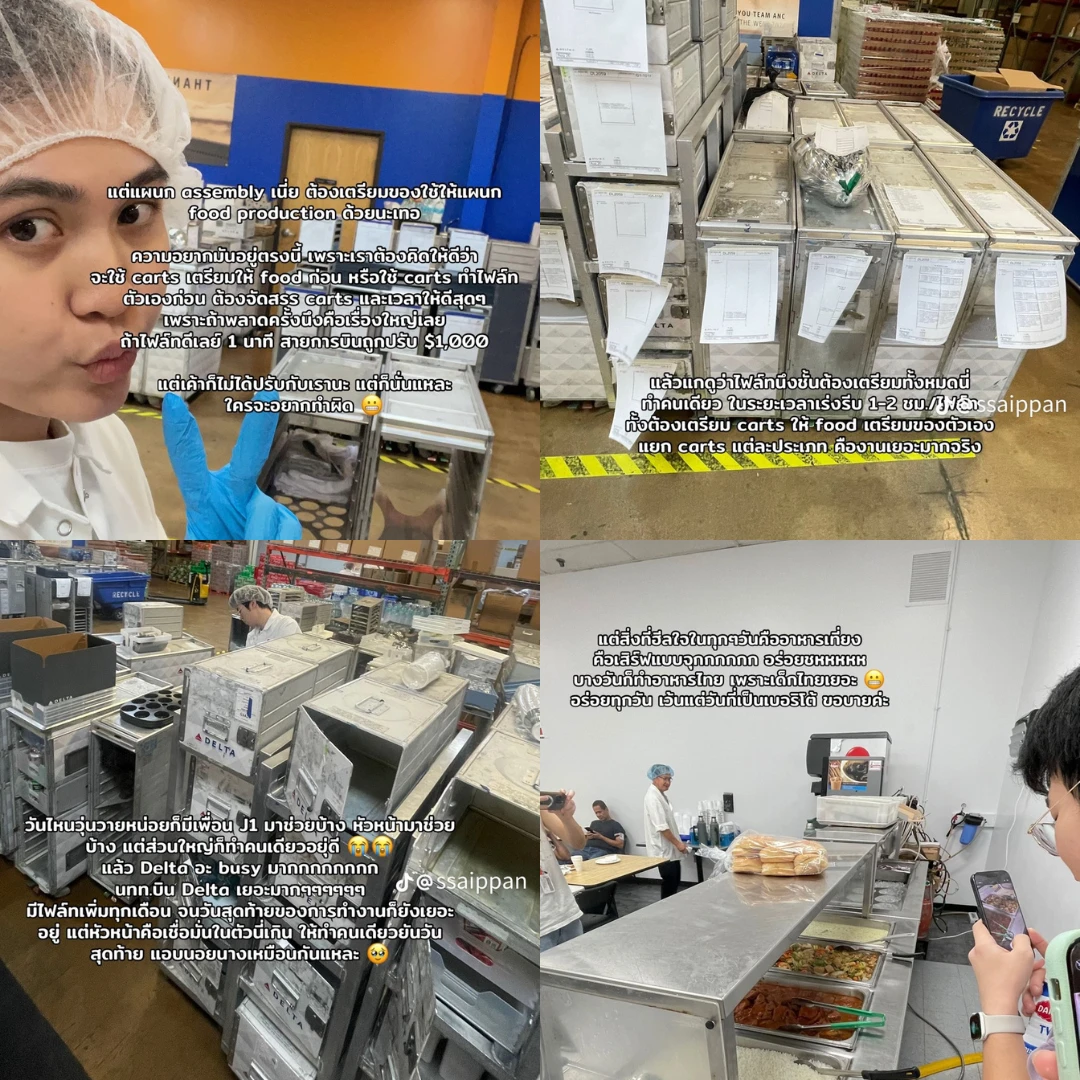
Saipan worked in the Assembly department. This department prepared non-food and support items for airline carts, including dry goods, snacks, water, soft drinks, cups, bowls, utensils, alcoholic beverages, and other service supplies.
Another friend was placed in Food Production, which focused on food preparation. Students arriving with friends should not assume they will work in the same department. The facility can separate participants based on staffing needs.
Assembly was demanding because it supported both its own flight carts and the Food Production team. Saipan had to decide how to allocate carts, time, and supplies in the right order. Poor timing could delay downstream work.
Typical Assembly responsibilities included:
- Reading airline diagrams and cart instructions
- Preparing carts by flight and airline
- Restocking dry goods, drinks, and service items
- Supporting Food Production with required cart supplies
- Tracking progress and signing off completed flights
- Solving small inventory issues when the facility was busy
Working the Delta Station
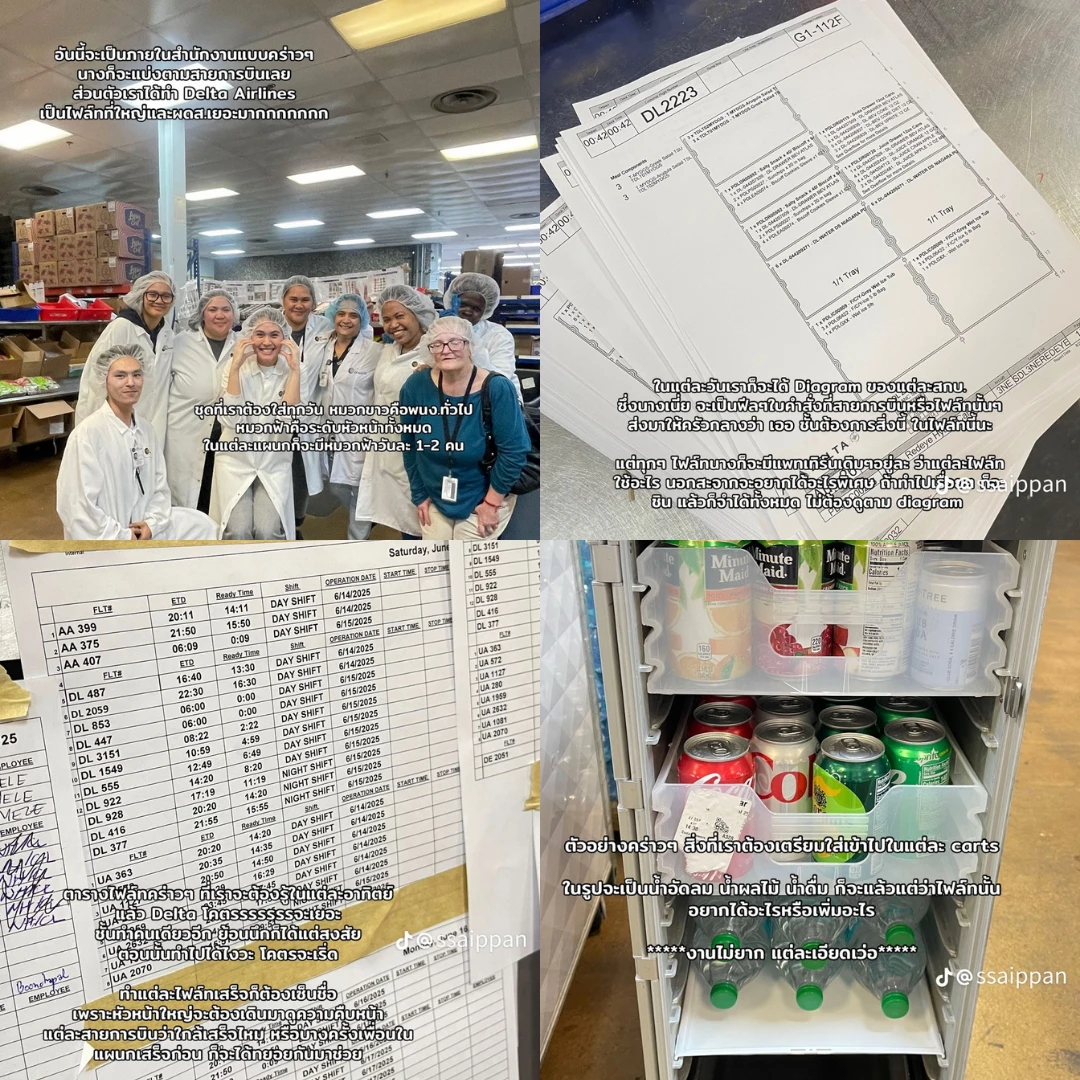
Saipan was assigned to the Delta Airlines station, which had heavy passenger volume and a large number of flights. Each week involved flight schedules and diagrams that showed what each flight needed.
Over time, repeated patterns made the job easier. At first, diagrams were essential. After enough repetition, Saipan could remember common cart setups without checking every line.
The station still required high attention to detail. If a flight was delayed because a cart was late or incomplete, the airline could face penalties. The penalty was not charged to the student, but the operational pressure made accuracy important.
The hardest part was managing multiple priorities at once:
- Preparing Delta carts on time
- Preparing carts or supplies for Food Production
- Separating cart types correctly
- Replenishing drinks, juice, dry goods, and supplies throughout the day
- Handling extra flight demand during peak summer travel
Some busy days included support from other J-1 students or supervisors. Most of the time, however, Saipan carried major responsibility for the Delta station independently.
Workplace Culture and Support
The workload was high, but Saipan described the workplace culture as supportive. Supervisors and coworkers treated J-1 students seriously, which came with both pressure and trust. The team expected students to perform, but they also helped when the workload became difficult.
Lunch was a major morale boost. The facility served substantial meals, and because many Thai students worked there, some days included Thai food. Other days included items like cake, pizza, and snacks.
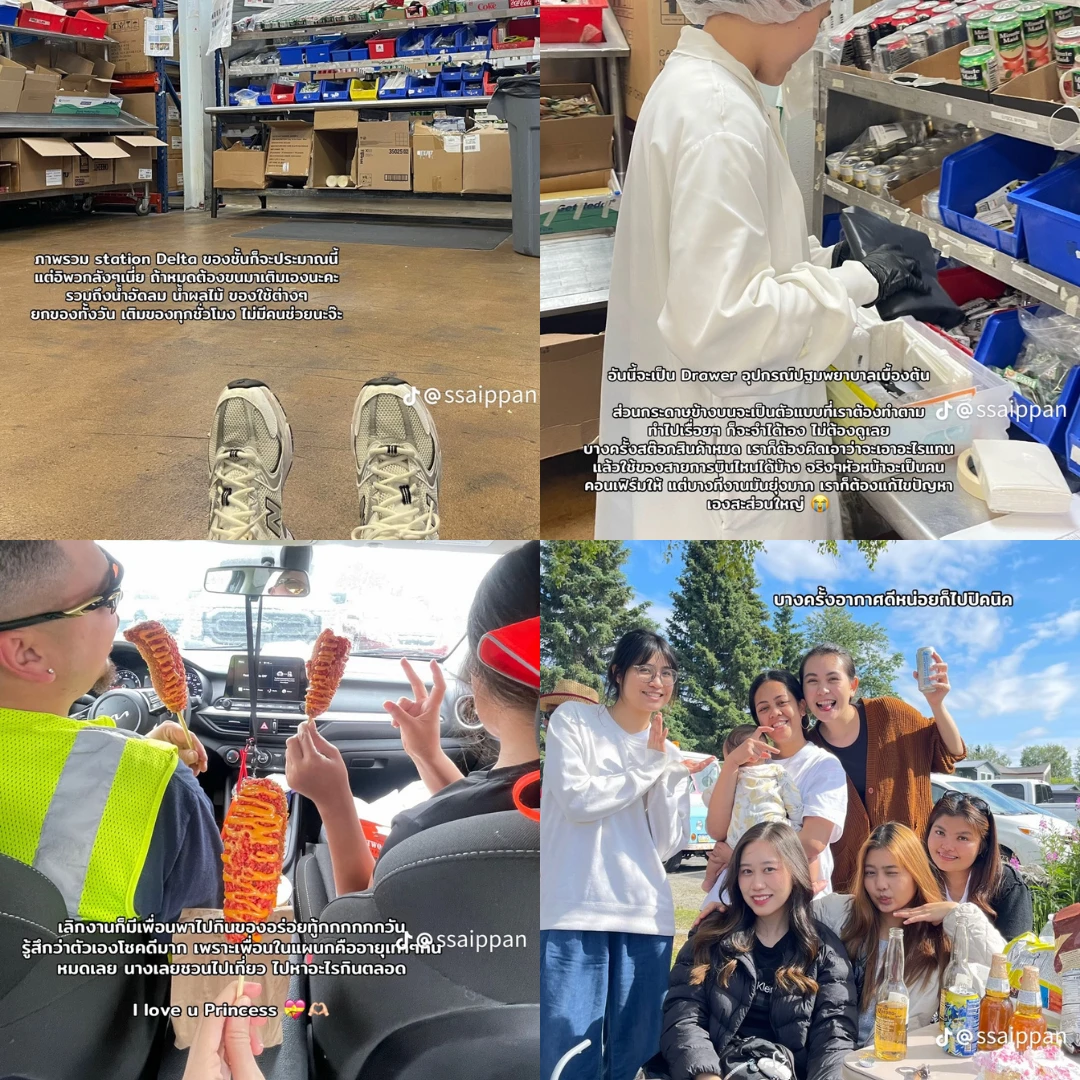
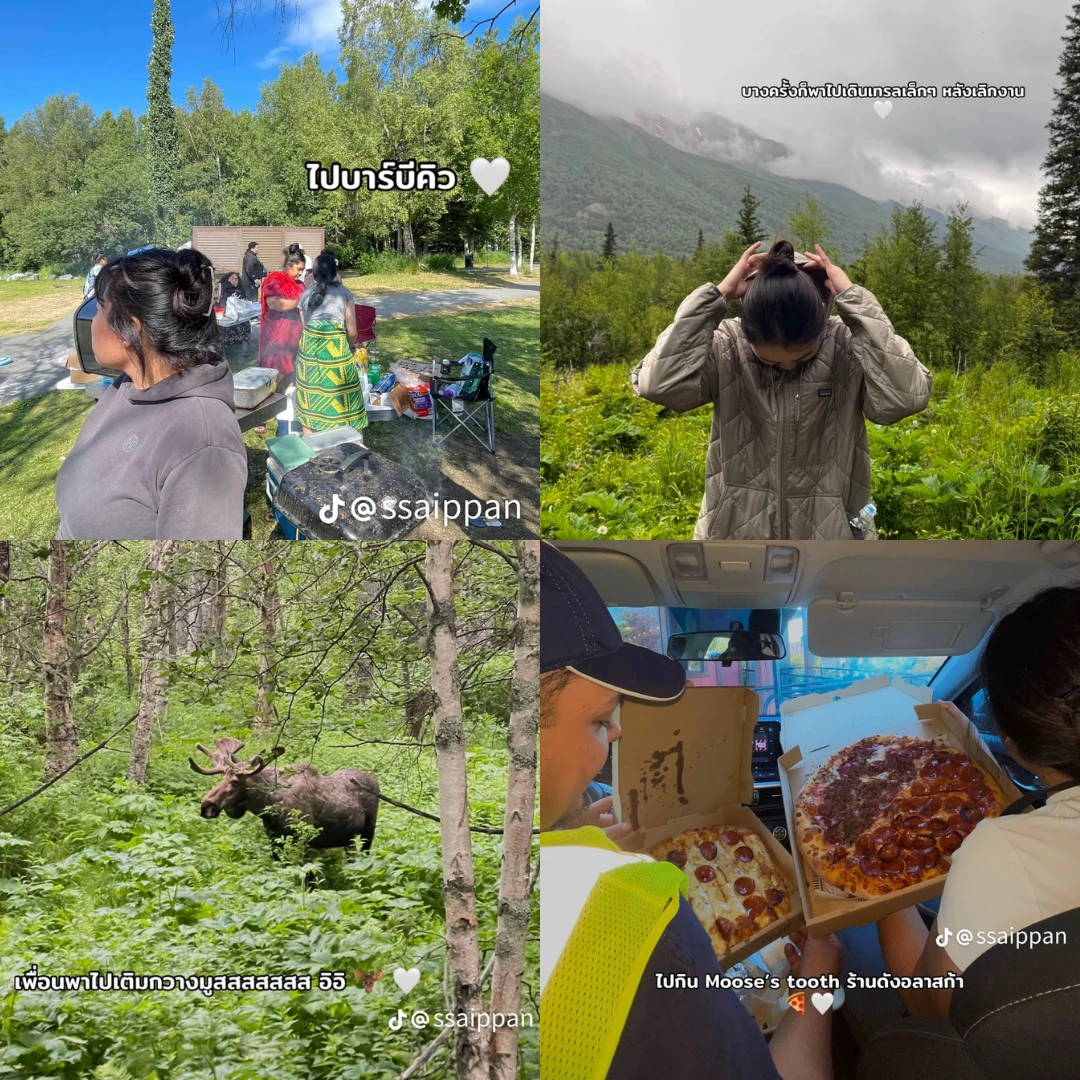
Outside work, coworkers also helped shape the experience. Saipan spent time with friends after shifts, including meals, picnics, barbecues, light trails, and local Anchorage food spots such as Moose’s Tooth.

Housing and Local Support
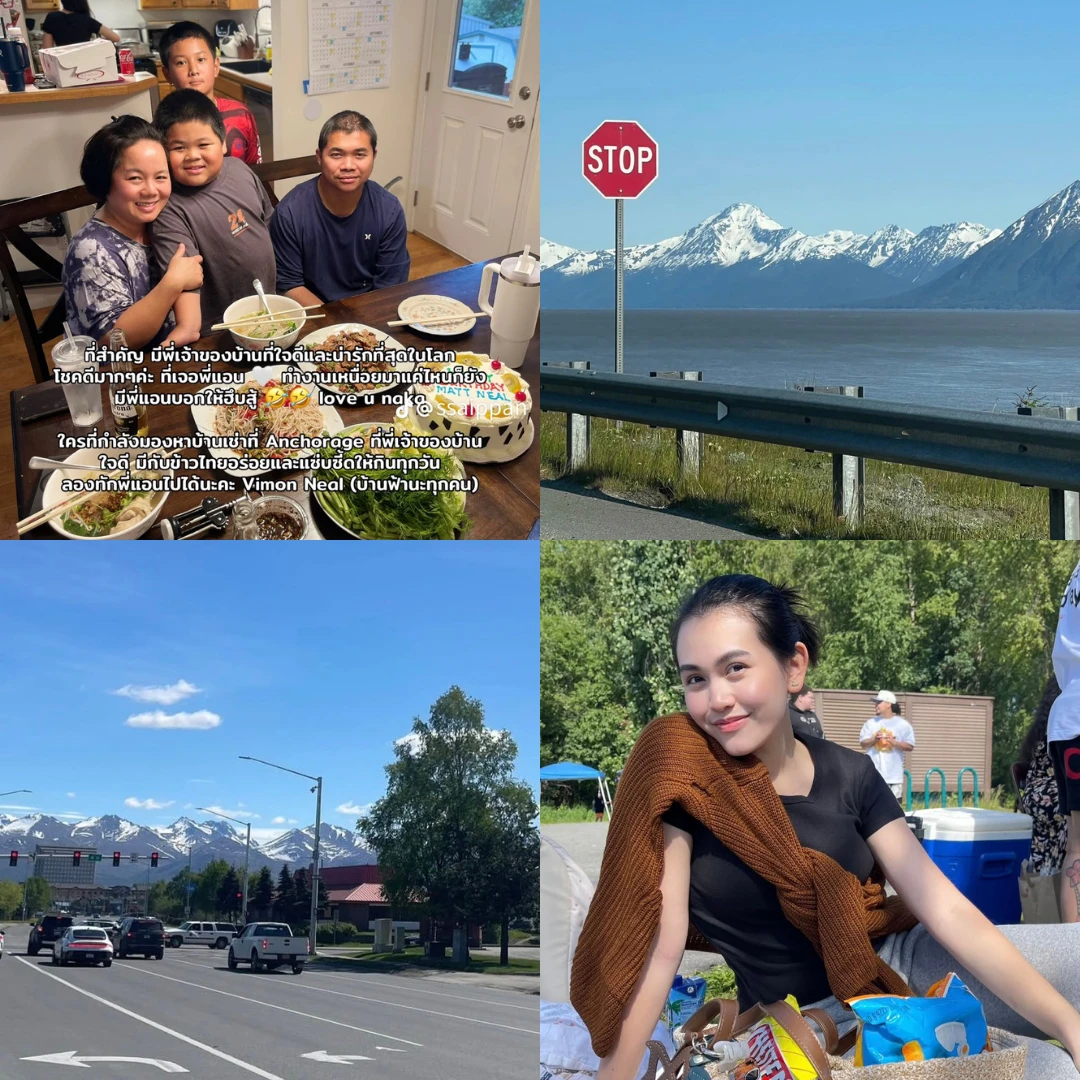
Housing support became an important part of Saipan’s Anchorage experience. The original review specifically mentioned a kind local host who helped create a stable home environment after tiring workdays.
For Alaska placements, this matters. The job can be physically and mentally demanding, and students may be far from familiar food, language, and community. Having a reliable housing arrangement and local support can make the difference between a stressful season and a sustainable one.
The case also shows the importance of community. A high-paying job is valuable, but students still need recovery time, food, transportation, and people they can rely on outside work.
What Saipan Learned
This placement worked because it resembled a serious full-time job. Saipan had to manage deadlines, instructions, inventory, supervisors, team communication, and consequences tied to real airline operations.
That level of responsibility can be stressful, but it also creates strong professional growth. Students who complete this kind of job return with a clearer understanding of workplace discipline than students who only experience casual seasonal roles.
The main skills developed were:
- Operational planning under time pressure
- Attention to detail across repeated flight diagrams
- Inventory and cart organization
- Cross-department coordination
- Workplace discipline and punctuality
- Problem solving when supplies or schedules changed
Who This Placement Is Best For
LSG Sky Chefs in Anchorage is a strong fit for students who want:
- A high hourly wage
- Overtime potential
- One main job instead of multiple employers
- Back-of-house operational experience
- A structured workplace with clear expectations
- A serious preview of full-time working life
It may be less suitable for students who want a relaxed travel-first season, dislike repetitive detail work, or are uncomfortable with strict attendance and performance standards. The job can pay well, but it earns that return through responsibility.
Key Takeaways
1. One job can be enough when the wage and overtime are strong
Saipan’s case is different from multi-job case studies. The earning potential came from one structured employer with peak-season overtime.
2. Airline catering work rewards accuracy
This is not only packing supplies. Each flight has requirements, and small errors can affect downstream airline operations.
3. Strict workplaces can create strong growth
LSG Sky Chefs treated J-1 students like regular employees. That pressure helped build discipline, responsibility, and professional confidence.
4. Local support matters in Alaska
Anchorage can be a high-value destination, but students need reliable housing, community, and recovery time after demanding shifts.
Source Note
This case study is adapted from a Thai-language participant review originally published by New Step Thailand: LSG Sky Chefs (Summer 2025) by Saipan. The story has been translated, reorganized, and rewritten in an editorial case-study format for English readers.
By Editorial Team