Student
Mildyonnaise
Location
Destin, Florida, USA
Program Year
2025
Published
Case Study
Case Study: Balancing Retail, Food Service, and Travel in Destin During Work and Travel Summer 2025
An English case study based on Mildyonnaise's Work and Travel experience in Destin, Florida, covering a Surf Style retail placement, second jobs at Dunkin and Jersey Mike's, transportation, beach life, and post-program travel.
Background
Mildyonnaise joined the Work and Travel USA program for the Summer 2025 season in Destin, Florida. The trip began with a long international route of roughly 37 hours, including connections through Japan and Texas before arriving in the United States.
The placement combined a primary retail job with two food-service jobs nearby. This created a high-workload summer, but it also gave her exposure to several common Work and Travel environments: beach retail, morning quick-service operations, ice cream service, and sandwich preparation.
This case is useful for students considering Florida beach destinations because it shows both sides of the experience. Destin offered strong lifestyle value, beautiful beaches, shopping, and travel opportunities. At the same time, the season required long days, careful transportation planning, and the ability to switch between different work routines.
| Job | Approx. Hours | Rate | Core Skill Developed |
|---|---|---|---|
| Surf Style | 35 hours/week | $15.50/hr | Retail service and product knowledge |
| Dunkin / Baskin Robbins | 20 hours/week | $15/hr + tips | Speed, order handling, and process memory |
| Jersey Mike’s | 18 hours/week | $14/hr + tips | Listening accuracy and customized food service |

Why Destin, Florida
Destin is a tourism-focused beach destination on Florida’s Emerald Coast. For Work and Travel students, its appeal is straightforward: seasonal employers, beach-town energy, shopping areas, and customer-facing jobs that give students daily English practice.
Mildyonnaise’s jobs were located in the same general area, which made it possible to manage multiple employers without needing long-distance commuting. That proximity was one of the biggest practical advantages of the placement.
The main limitation was transportation. At first, she used a bicycle. Later, she bought a scooter, which made commuting easier but introduced safety concerns for students who are not confident riders. This is an important point for future participants: in Florida beach towns, location and transportation can matter as much as hourly wage.
Primary Job: Surf Style
Mildyonnaise’s first job was at Surf Style, a beachwear and souvenir retail store. The wage was $15.50 per hour, and she averaged around 35 hours per week across four to five working days.
Her usual shift was 3:15 PM to 11:15 PM. The work was not physically heavy in the same way as kitchen or outdoor labor, but it required standing, walking, organizing stock, and staying attentive through long retail hours.
Main responsibilities included:
- Folding clothes
- Restocking products
- Helping customers
- Handing out coupons
- Tagging merchandise
- Cashier work
- Closing and tidying the store
The role became easier as she learned the store layout. At first, finding the correct product area was difficult because the shop had many zones and many shirt designs. After repetition, product memory improved and daily tasks became faster.
From a skill-development perspective, cashier work was the most valuable part of the job. It created more chances to speak with customers, handle small questions, and build comfort in routine English conversations. Most customers were families on vacation, which made the service environment relatively friendly.
Second Job: Dunkin and Baskin Robbins
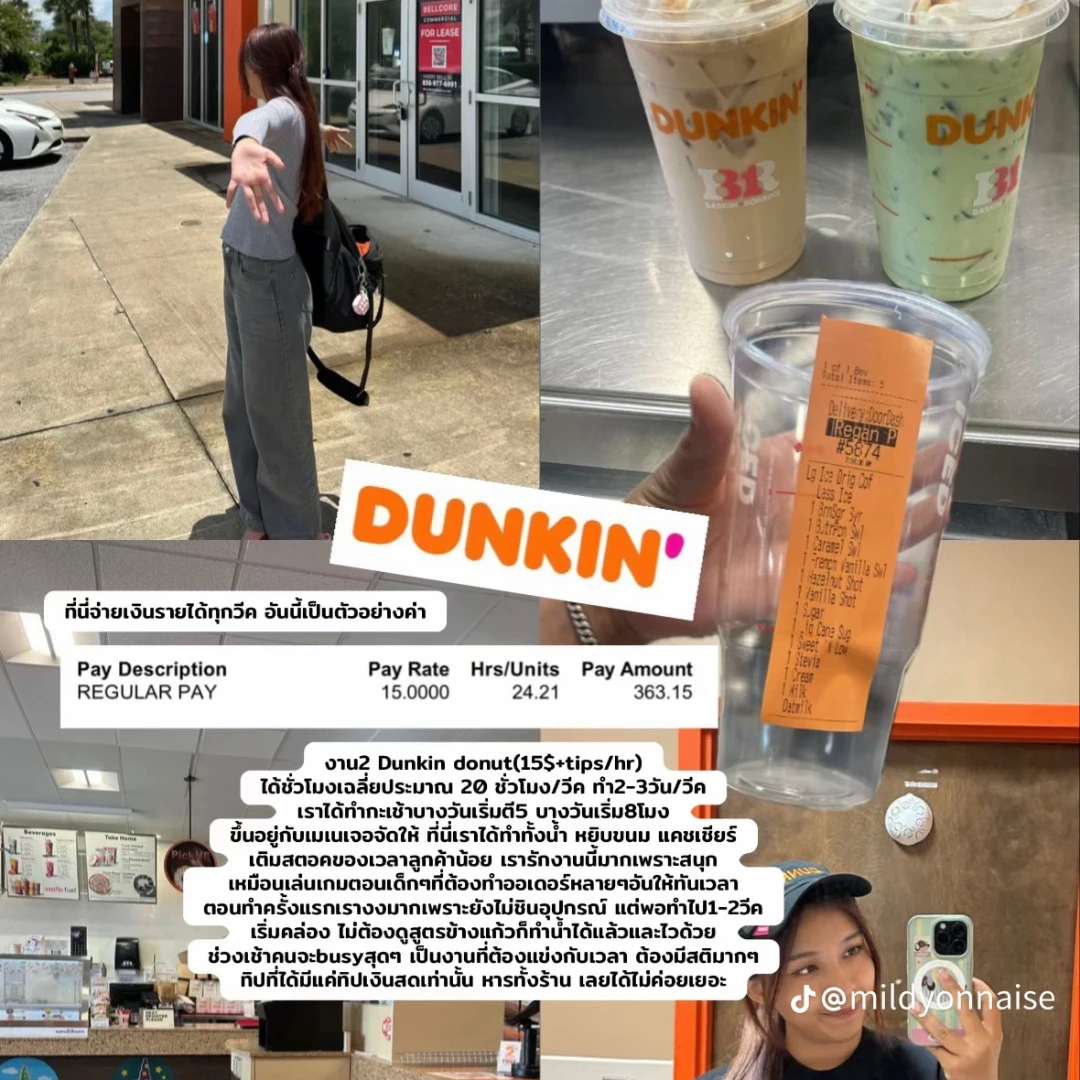
The second job was at Dunkin, paid at $15 per hour plus tips. She averaged around 20 hours per week, usually across two to three days. Shifts were often early: some began at 5:00 AM, while others started around 8:00 AM.
This job was faster and more operationally intense than Surf Style. She handled drinks, donuts, cashier work, and restocking during slower periods. The morning rush required speed, memory, and concentration because orders came quickly and mistakes could slow down the line.
At first, the drink-making system was confusing because she was still learning the equipment and recipes. After one to two weeks, she became faster and could prepare drinks without relying heavily on recipe notes.
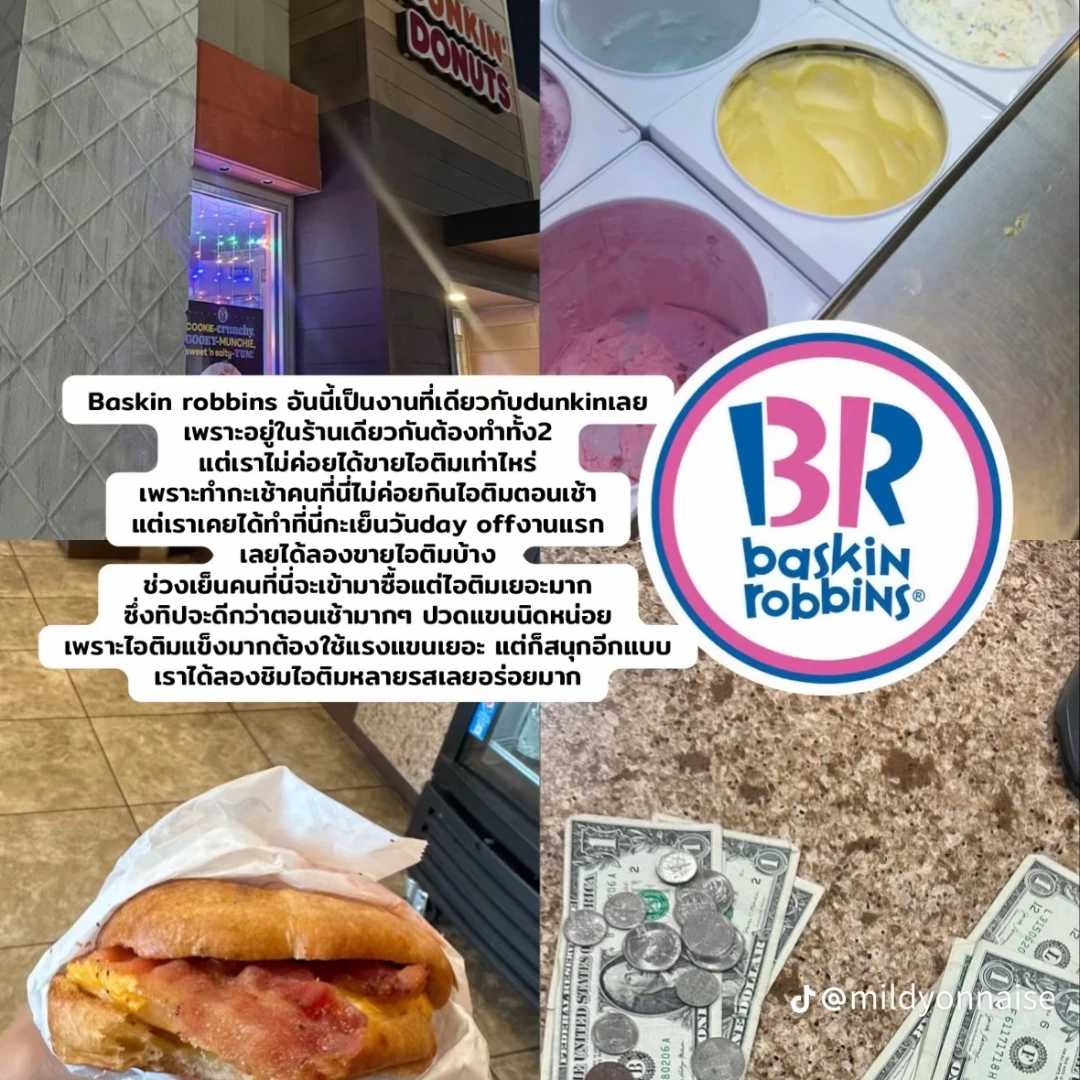
The same location also included Baskin Robbins, so she occasionally helped with ice cream service. Because she usually worked morning shifts, she did not serve ice cream as often. When she did work evening or day-off shifts, customer demand for ice cream was higher and tips were better. The work was physically different from Dunkin because scooping hard ice cream required more arm strength.
One practical benefit of the job was access to food and drinks during shifts. She could try drinks, donuts, sandwiches, and ice cream, and closing shifts sometimes allowed staff to take leftover donuts home because the store made them fresh daily.
Third Job: Jersey Mike’s
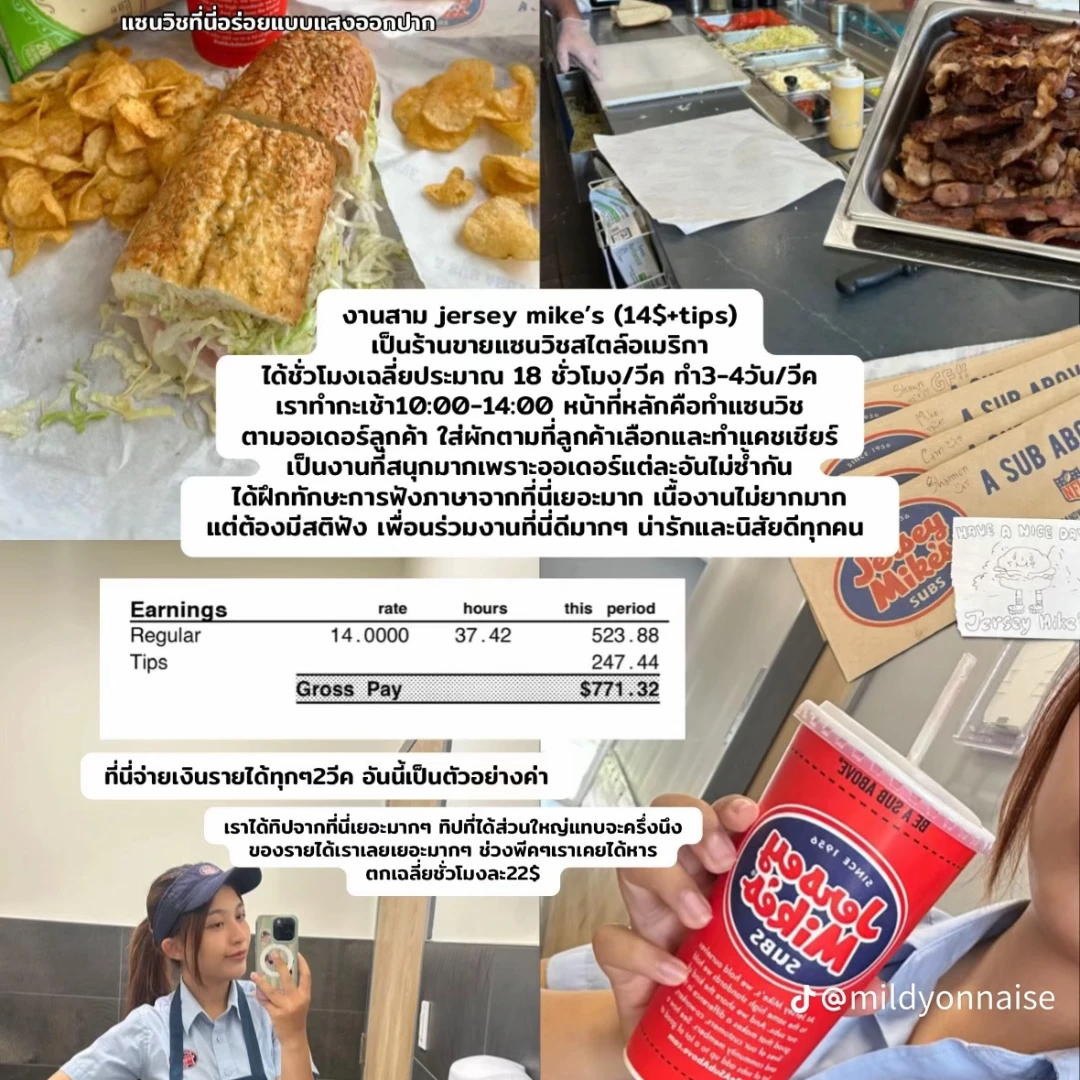
The third job was at Jersey Mike’s, paid at $14 per hour plus tips. She averaged around 18 hours per week across three to four working days.
Her typical shift was 10:00 AM to 2:00 PM. The role focused on sandwich preparation and cashier work. Compared with Surf Style, this job demanded more listening accuracy because each customer’s sandwich order could be different.
The work itself was not complicated, but it required focus. She had to listen carefully, follow ingredient choices, move quickly during service, and communicate clearly with both customers and coworkers.
This job was particularly useful for English listening practice. In food service, customers often speak quickly, customize orders, and use casual language. That made Jersey Mike’s a strong training ground for real-world listening skills.
The team environment was positive, and coworkers were supportive. Another small but memorable benefit was being able to get free ice cream from a neighboring shop after work while wearing the employee uniform.
Managing Three Jobs
All three jobs were located close to each other, which made the schedule possible. Even so, the workload was demanding. Some days started early at Dunkin, continued with another short food-service shift, and ended with a late Surf Style retail shift.
The transportation pattern changed over the season. Early on, she commuted by bicycle. Later, she bought a scooter, which saved time and energy but also required more caution. For students considering multiple jobs in a spread-out destination, this is one of the key planning issues.
The case shows that multiple jobs can work when three conditions are present:
- The jobs are physically close enough to connect between shifts
- Managers can schedule around other work commitments
- The student has enough stamina for early mornings and late nights
Without those conditions, a three-job plan can become unrealistic quickly.
The practical lesson from this case is that a second or third job is only useful when the commute is manageable. In a beach destination, transportation planning is part of the job strategy.
Life Outside Work
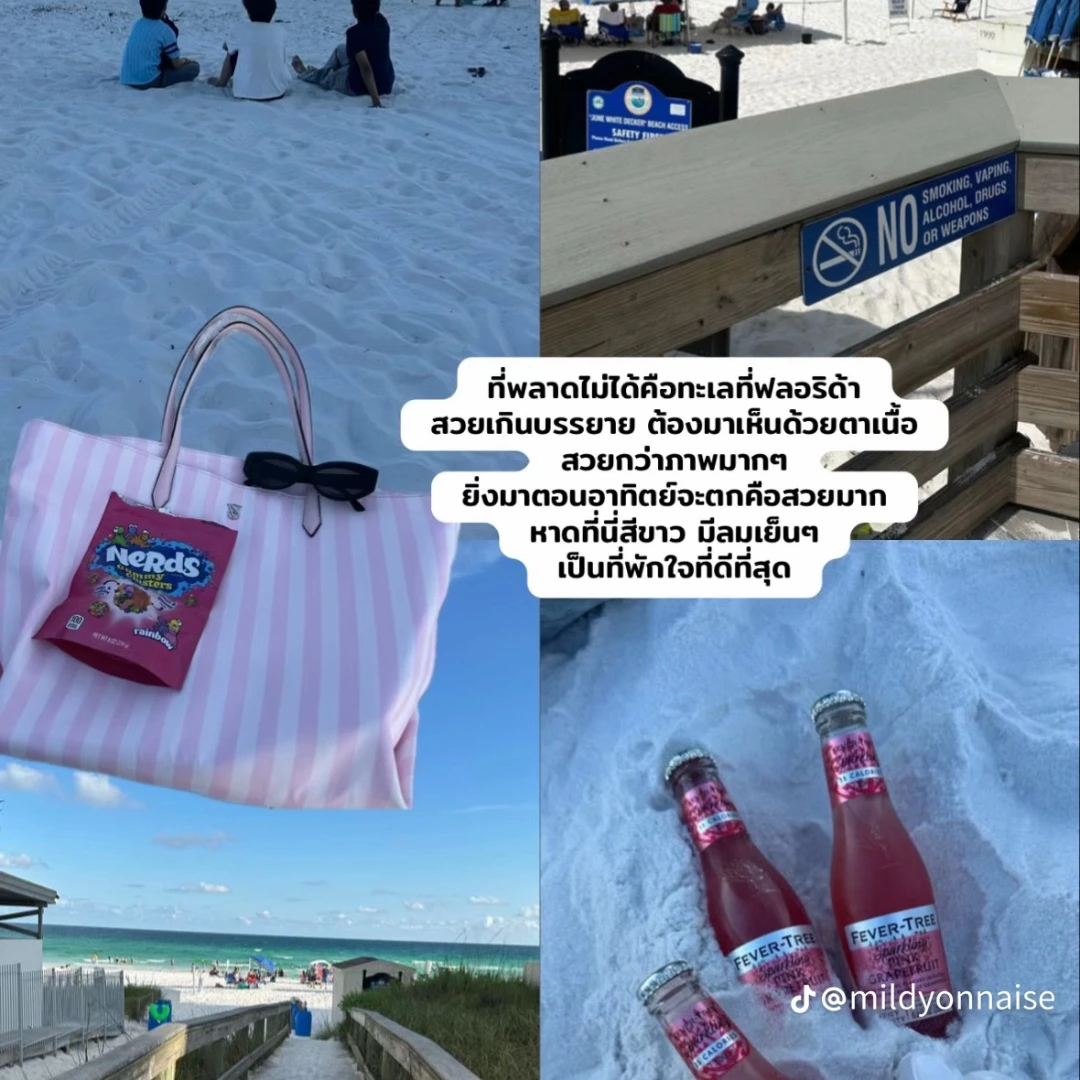
The strongest lifestyle advantage of this placement was the beach. Mildyonnaise described the Florida coast as more impressive in person than in photos, especially near sunset. The white sand, sea breeze, and open beach environment became a place to rest after long workdays.
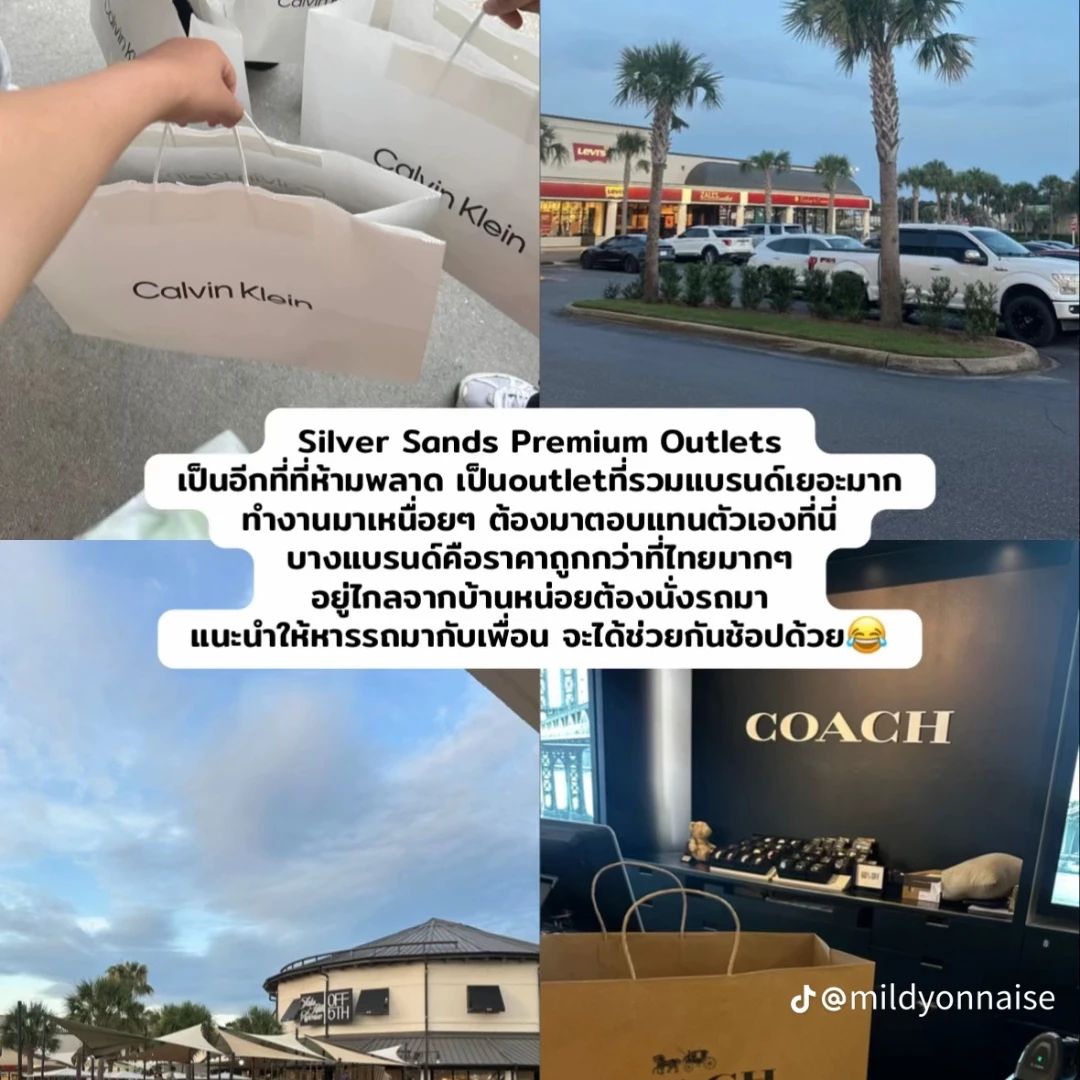
Destin also offered shopping access. Silver Sands Premium Outlets was a highlight because it included many major brands, some at prices lower than in Thailand. The outlet was farther from home, so sharing transportation with friends was the practical approach.
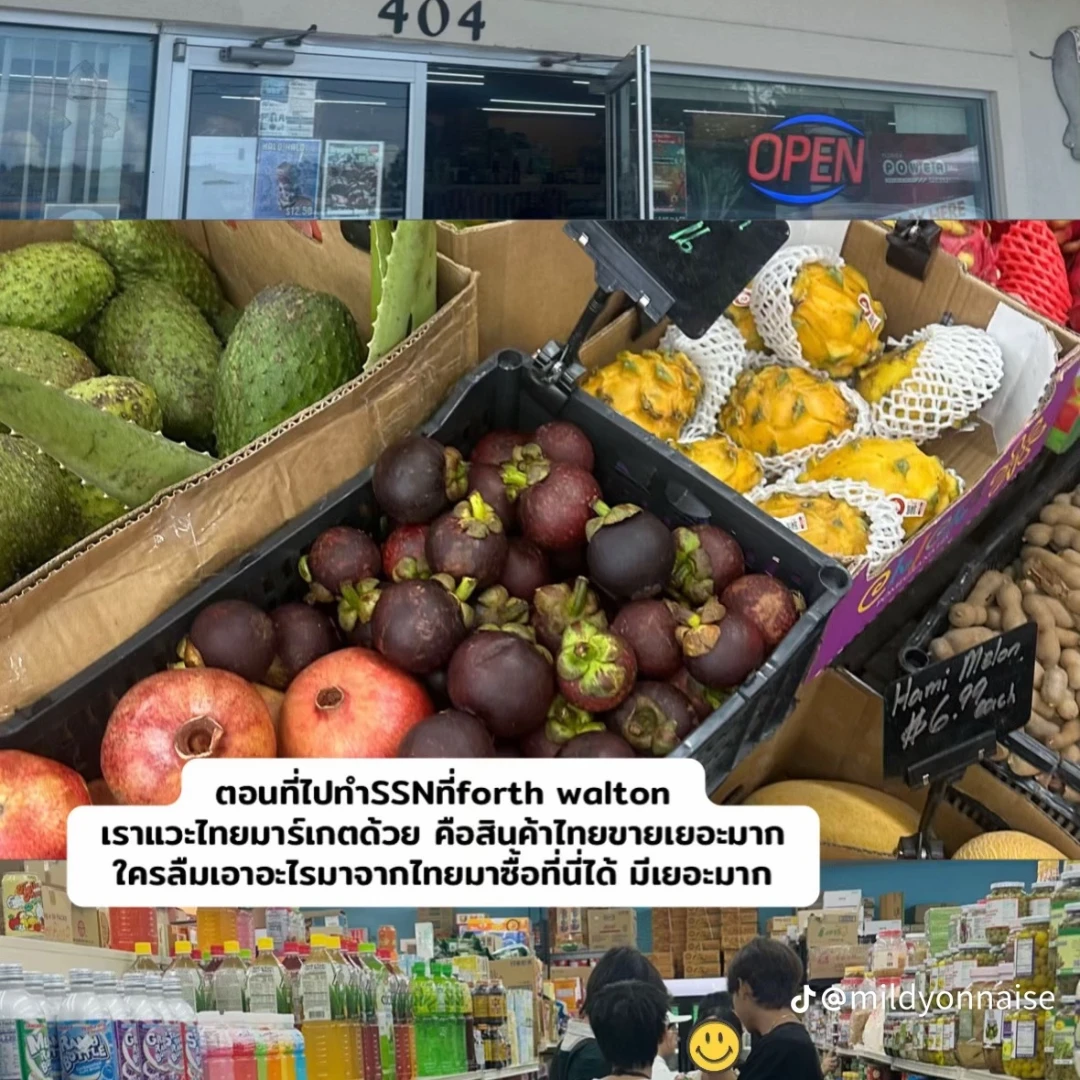
During the Social Security Number process in Fort Walton, she also visited a Thai market. This was useful for students who forgot items from Thailand or wanted familiar food and products during the season.
Post-Program Travel
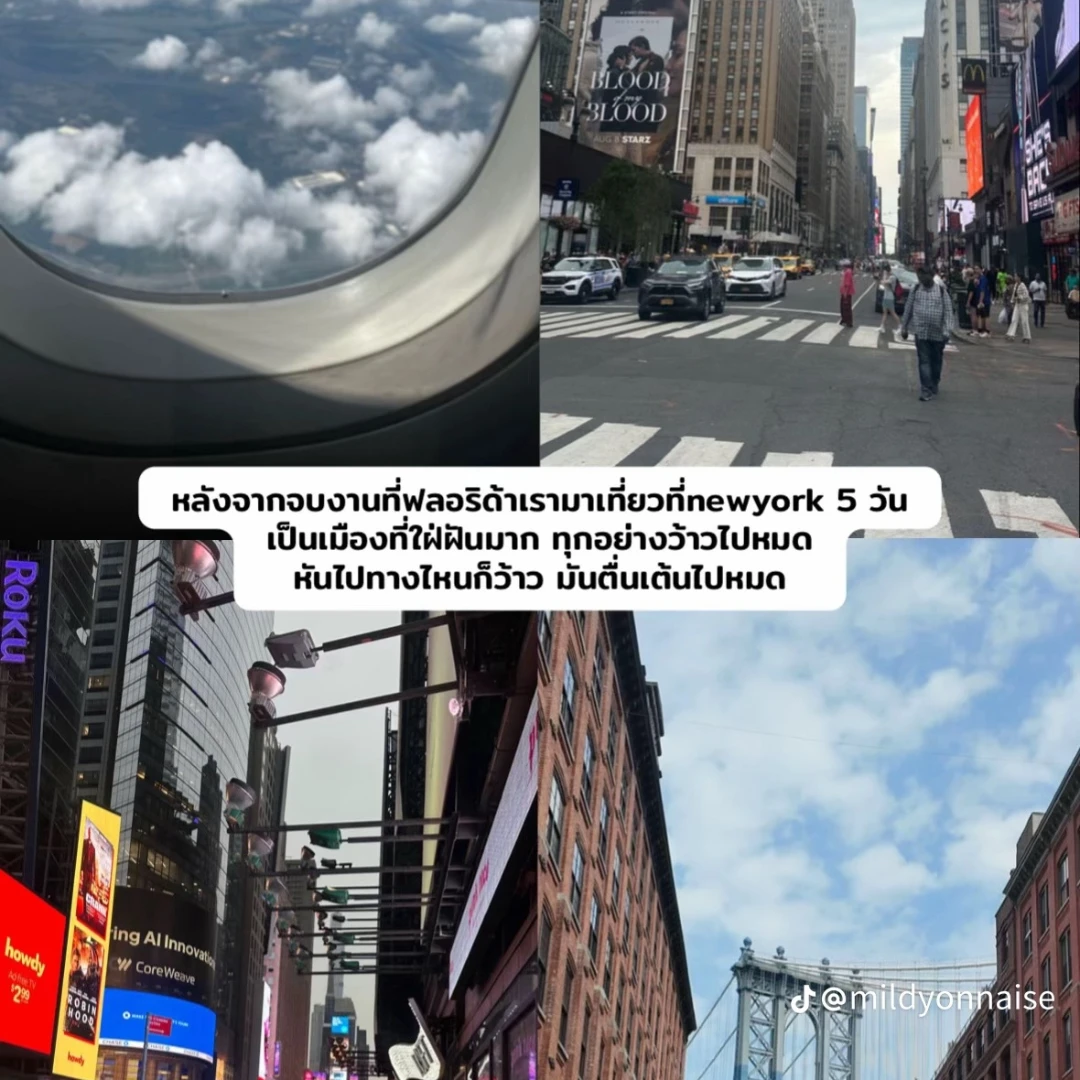
After completing the Florida work season, Mildyonnaise traveled to New York City for five days. New York was a dream destination for her, and it became a strong final chapter before leaving the United States. The city offered a complete contrast to Destin: dense, fast-moving, visually impressive, and full of places to explore.
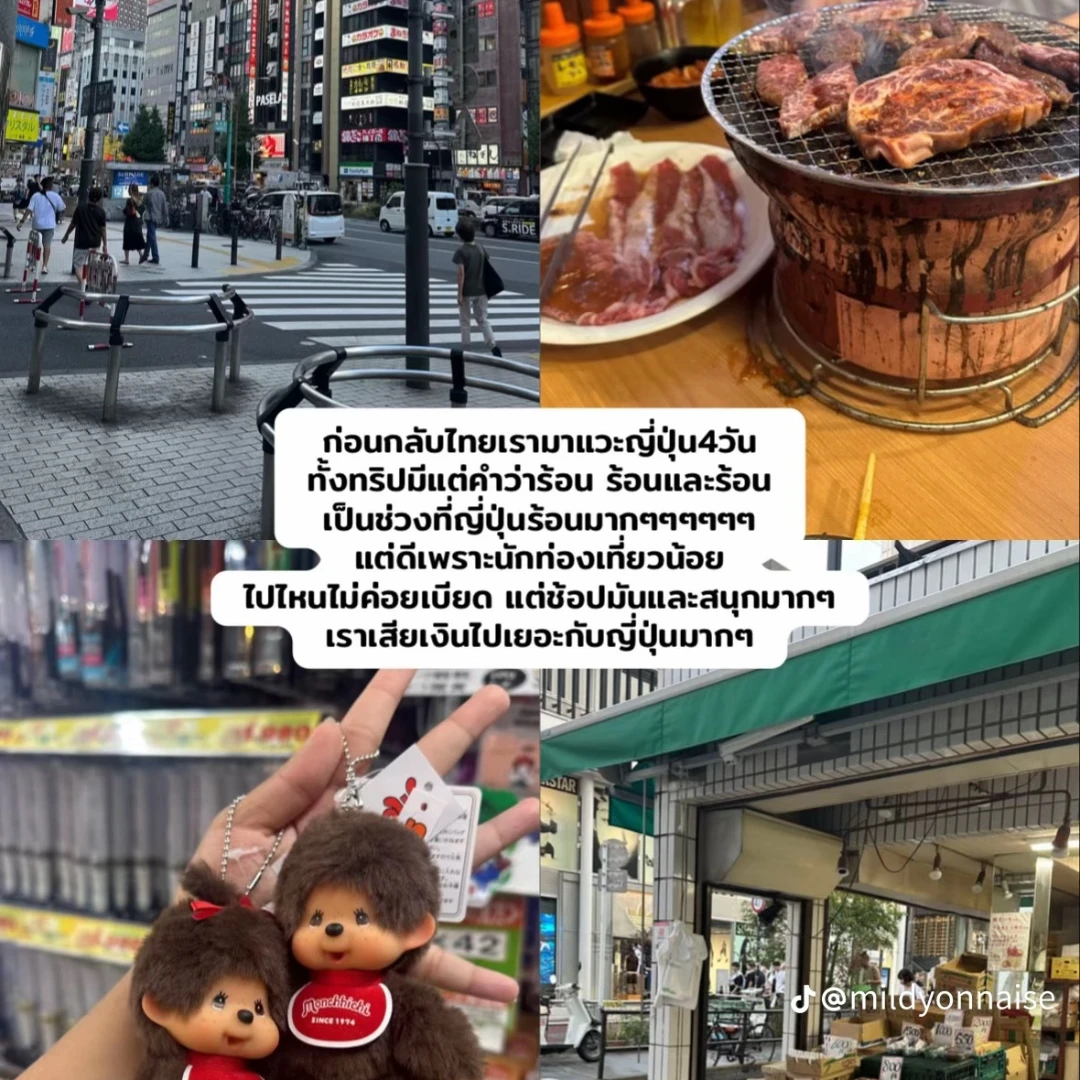
Before returning to Thailand, she also stopped in Japan for four days. The weather was extremely hot, but the smaller tourist crowds made travel easier. The Japan stop added cost, but it also made the overall program feel like a broader international journey rather than only a U.S. work placement.

What Mildyonnaise Learned
This case demonstrates how quickly students can adapt when they move across different work settings. Surf Style built retail confidence and product knowledge. Dunkin and Baskin Robbins built speed, process memory, and customer handling under time pressure. Jersey Mike’s strengthened listening skills because every order required careful attention.
The experience also showed the importance of physical stamina. Standing through retail shifts, waking up early for quick-service work, and commuting between jobs can be tiring. Good shoes, reliable transport, and realistic scheduling are not small details; they directly affect whether the season is sustainable.
The final lesson was emotional. After three months of work and travel, Mildyonnaise described the end of the trip as bittersweet. The summer was tiring, but it also brought new experiences almost every day. That is the central value of this type of placement: the student leaves with more than a list of jobs.
Who This Placement Is Best For
Destin and similar Florida beach placements are a strong fit for students who want:
- A summer destination with beach lifestyle value
- Retail and food-service experience
- Multiple job opportunities located near each other
- Daily English practice with tourists and local customers
- A balance of work, shopping, beach time, and post-program travel
This placement may be less suitable for students who need a simple schedule, dislike early mornings, or are uncomfortable commuting by bicycle or scooter. Students should also budget carefully if they plan to shop at outlets or add travel after the work season.
Key Takeaways
1. Location can make or break a multi-job plan
Mildyonnaise could manage three jobs because they were in the same general area. Students should evaluate commute time before accepting additional work.
2. Food-service jobs develop speed and listening skills
Dunkin, Baskin Robbins, and Jersey Mike’s required fast order handling. These jobs were useful for students who want practical English practice in real customer situations.
3. Beach destinations offer strong lifestyle value
Destin was not only a place to work. The beach, outlets, and nearby services helped make the difficult parts of the season feel worthwhile.
4. Post-program travel should be planned into the budget
New York and Japan added major value to the overall experience, but they also required extra spending. Students who want a similar route should budget for it before departure.
Source Note
This case study is adapted from a Thai-language participant review originally published by New Step Thailand: Surf Style (Summer 2025) by Mildyonnaise. The story has been translated, reorganized, and rewritten in an editorial case-study format for English readers.
By Editorial Team